
Événements à venir
Aucun événement à venir pour le moment
Événements passés

WEBINAIRE : Réunion préparatoire régionale Afrique en vue de la Sixième Conférence internationale sur les villes apprenantes (ICLC 6)
DATE : 12 novembre 2024
HEURE :13h00 à 15h00 (SAST) 14h00 - 16h00 (EAT)
Contexte
L'Institut de l'UNESCO pour l'apprentissage tout au long de la vie (UIL), en collaboration avec la ville industrielle de Jubail, Royaume d'Arabie Saoudite, membre du Réseau mondial des villes apprenantes (GNLC), organisera la Sixième Conférence internationale sur les villes apprenantes (ICLC 6) du 3 au 5 décembre 2024.
ICLC 6, à l'instar de ses prédécesseurs, offrira l'occasion aux membres du GNLC et aux parties prenantes des villes apprenantes de se réunir, de renforcer leurs liens et de partager leurs expériences dans le développement des villes apprenantes. Le thème de la conférence de cette année, « Les villes apprenantes à l'avant-garde de l'action climatique », met l'accent sur la promotion de la conscience climatique et l'acquisition de compétences vertes nécessaires pour vivre et soutenir une société durable.
Les participants discuteront de stratégies pour une action climatique unifiée et exploreront comment les villes peuvent collaborer pour lutter contre le changement climatique. La conférence fournira également une plateforme pour l'échange de connaissances sur les initiatives climatiques et la présentation de projets visant à renforcer la résilience communautaire face aux crises environnementales.
Les résultats de l'ICLC 6 incluront un document de synthèse, définissant les politiques et programmes futurs pour promouvoir l'action climatique dans les villes à travers l'apprentissage tout au long de la vie, ainsi qu'une nouvelle stratégie opérationnelle pour le GNLC, élaborée par les délibérations des villes membres.
Dans le cadre du processus préparatoire de l'ICLC 6, le GNLC encourage ses membres à organiser des réunions régionales ou sous-régionales avant la conférence.
Objectifs principaux :
Ces réunions préparatoires régionales offriront l'occasion de renforcer les réseaux régionaux existants ou d'en établir de nouveaux. Organisées en amont de l'ICLC 6, elles peuvent fournir une plateforme pour un dialogue structuré et pour renforcer les efforts de collaboration des villes membres du GNLC au sein d'une région ou sous-région de l'UNESCO.
- Aborder les questions plus larges de développement durable pertinentes pour la région, telles que le développement économique, la protection de l'environnement, la santé et le bien-être, l'inégalité sociale, la pauvreté, la migration, la citoyenneté, l'apprentissage numérique, l'accès à l'éducation et l'égalité des sexes, entre autres, avec des réponses éducatives ciblées ;
- Efforts de collaboration dans la région, tels que l'établissement de réseaux régionaux, le développement de stratégies conjointes et la coordination des communications conjointes ;
- Se mettre d'accord sur des points d'action et permettre l'évaluation des progrès, l'échange d'expériences et de bonnes pratiques sur une base régulière.
Partenaires :
- Institut de l'UNESCO pour l'apprentissage tout au long de la vie
- Bureau de l'UNESCO à Nairobi
- DVV International
- Plateforme MOJA
- Conseil international pour l'éducation des adultes / PAMOJA
Participants :
Représentants/focales gouvernementaux des villes apprenantes, experts d'ONG et de la société civile.
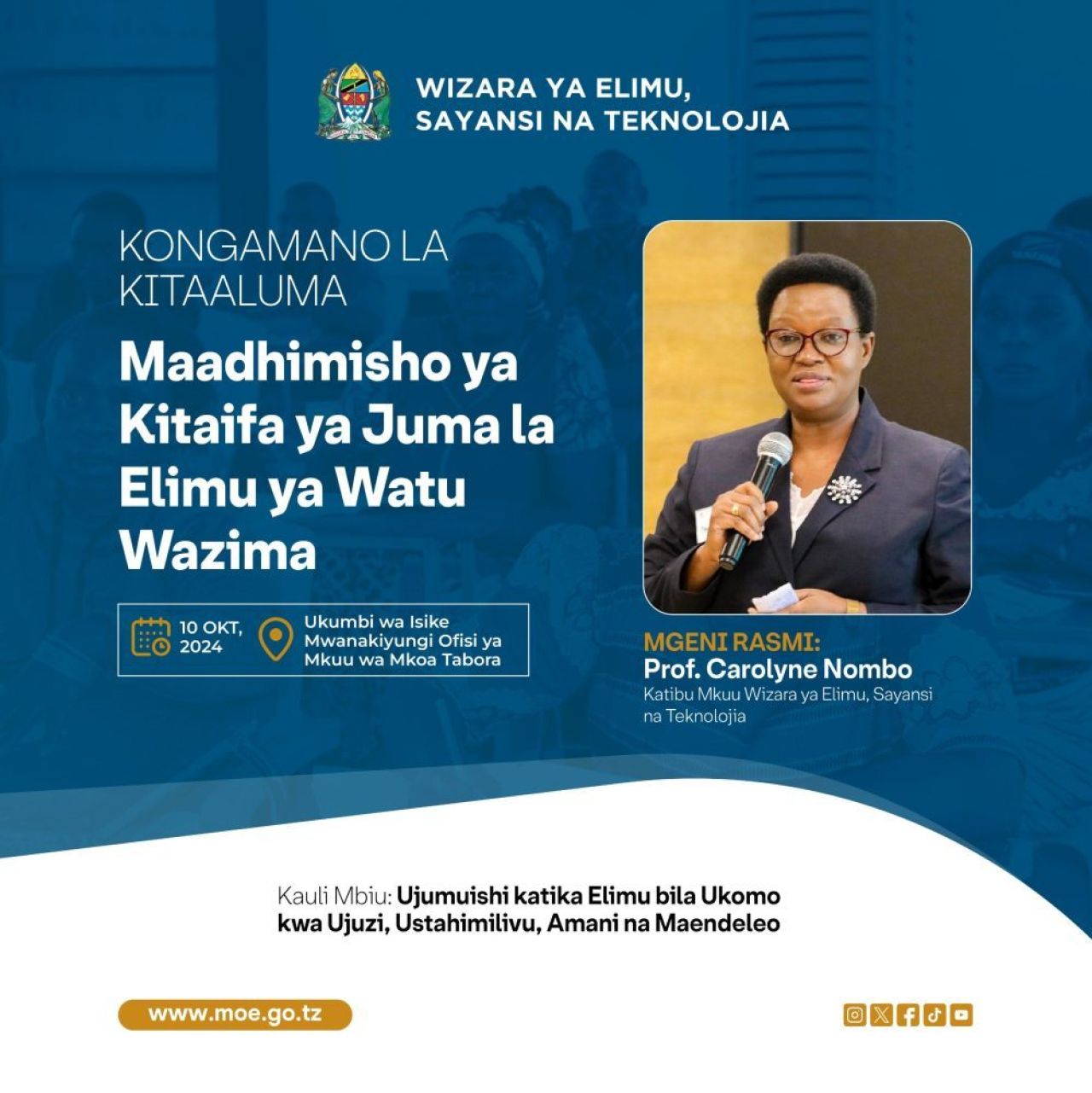
International Literacy Day Symposium - Tanzania
| Afrique de l'Est Atelier
Webinar: Teacher Voices in and for Lifelong Learning
| Global
Time indicated is Paris time.
You are warmly invited to the webinar ‘Teacher Voices in and for Lifelong Learning’ on 11 October 2024. The event is part of World Teachers' Day 2024 celebrations, and is co-hosted by the UNESCO Institute for Lifelong Learning (UIL) and the UNESCO Section for Teacher Development.
Teachers play an essential role in upholding the right to education. To ensure quality education and learning opportunities for all, every learner must have access to a qualified teacher. Therefore, teachers must continuously engage in professional development to navigate and respond to the evolving expectations and challenges of societies worldwide. At the same time, teachers are pivotal in transforming education into lifelong learning systems, acting as 'facilitators of lifelong learning' who instill lifelong learning values, dispositions, attitudes, and skills in their students and communities.
As active agents of change, teachers possess the capacity to influence educational practices and shape learning environments. World Teachers' Day is an opportunity to recognize the transformative role teachers play in education, to reflect on the support they need to fully realize their potential, and to reimagine the future of the teaching profession together.
This webinar will explore how teachers' voices can contribute to shaping policies and practices of lifelong learning and how this, in turn, can promote lifelong learning among teachers and learners.
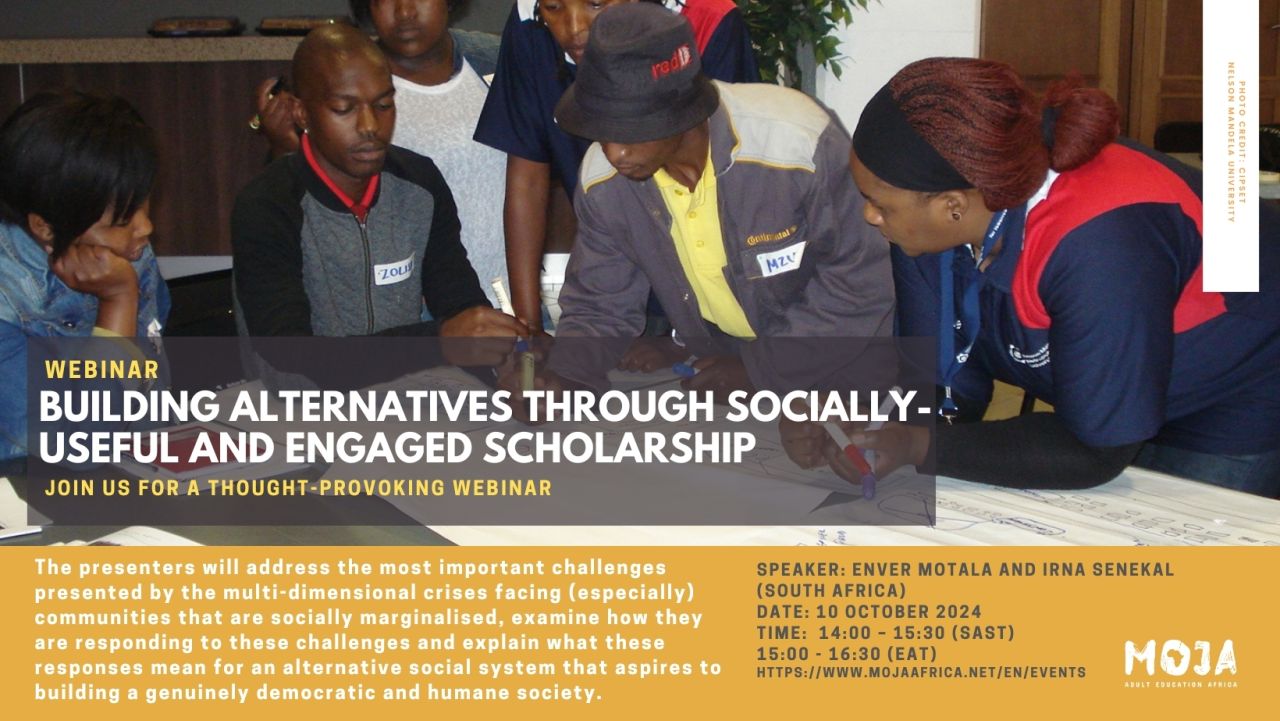
Webinaire: Construire Des Alternatives A Travers Une Recherche Socialement Utile Et Engagée
INTERVENANTS: Enver Motala et Irna Senekal
DATE : 10 Octobre 2024
HEURE: 14h00
Les intervenants aborderont les défis les plus importants présentés par les crises multidimensionnelles touchant surtout les communautés socialement marginalisées, examineront comment elles répondent à ces défis et expliqueront ce que ces réponses signifient pour un système social alternatif aspirant à construire une société véritablement démocratique et humaine.
*À PROPOS DE LA SÉRIE DE WEBINAIRES MOJA – AEHEAN*
MOJA, en conversation avec des éducateurs d'adultes dans l'enseignement supérieur en Afrique, a établi un réseau qui rassemble des chercheurs basés dans des universités à travers l'Afrique. L'idée est que ce réseau (AEHEAN) s'étende à toutes les différentes régions du continent. L'objectif principal du réseau est de créer des relations, des partenariats et de la solidarité dans l'éducation des adultes sur le continent.
MOJA a l'intention de faciliter et de convoquer une série de discussions en webinaire. Le but de ces webinaires est de soutenir le développement des capacités intellectuelles et pratiques des éducateurs et de leurs associés impliqués dans les activités liées à l'étude et à la pratique de l'apprentissage et de l'éducation communautaires sur le continent africain. L'intention de MOJA est de fournir des opportunités pour un tel apprentissage en développant le réseau parmi ceux qui sont impliqués, dans l'espoir que le réseau générera lui-même un développement supplémentaire de ces questions. MOJA croit qu'un tel réseau soutiendra le travail des éducateurs sur le terrain, pourrait influencer leurs idées et pratiques, leurs institutions et influencer les décideurs politiques dans ce domaine. Plus important encore, il renforcerait le travail de l'éducation des adultes et communautaires là où elle est pratiquée.
Les objectifs de la série de webinaires sont :
- Stimuler une discussion sur la relation entre l'apprentissage, la recherche engagée et l'éducation communautaire dans le contexte du développement (ou sous-développement) et de l'histoire du continent africain.
- Fournir une opportunité aux éducateurs du système d'enseignement supérieur provenant de pays africains de discuter des questions pertinentes à leur travail en relation avec les questions susmentionnées.
- Stimuler une plus grande sensibilisation aux défis contextuels auxquels sont confrontées les communautés et l'apprentissage dans un tel contexte.
- Stimuler le développement de la réflexion et la production d'écrits académiques engagés et d'autres formes d'écriture sur ces questions.
- Découvrir des écrits et d'autres matériaux utiles, tels que des podcasts, des webinaires et des matériaux audiovisuels qui seraient utiles pour le développement ultérieur de la compréhension de ces questions.
MOJA invitera des intervenants qui connaissent bien ce domaine de travail et distribuera des matériaux pertinents pour chaque discussion en webinaire afin de permettre aux participants de se familiariser avec ces matériaux en préparation des webinaires.
Pour soutenir l'objectif énoncé ci-dessus, MOJA initiera une série de 3 séminaires. Ces webinaires seront facilités par MOJA et ses associés et se dérouleront sur une période de 3 mois. Par la suite, une réflexion sera menée sur l'extension de la série de séminaires autour de sujets pertinents et émergents des premiers webinaires.
Mots clés associés aux présentations : économie politique ; éducation des adultes ; éducation communautaire ; recherche socialement engagée ; alternatives ; changement social ; justice sociale ; solidarité ; praxis ; connaissance co-construite ; changement climatique ; systèmes de besoins communautaires ; moyens de subsistance.
L'heure et la date de ce troisième webinaire seront annoncées ultérieurement.

Perspectives on Workers’ Education in Nigeria and South Africa
| Africa
Join us for a webinar on workers’ education in South Africa and Nigeria, hosted by the Centre for Education Rights and Transformation and the DHET-NRF SARChI Chair in Community, Adult and Workers' Education (CAWE). The webinar will feature a discussion of competing ideologies and perspectives on workers’ education. Professor Mondli Hlatshwayo, who has researched workers’ education in Nigeria and South Africa, will be joined by Baba Aye and Edwin Nisha, both intellectuals and activists in the Nigerian and global labour movement.
SUMMARY: Comparative analysis of the African labour movements is rare, and yet these movements grapple with similar challenges, such as confronting colonial and post-colonial labour regimes. While South Africa and Nigeria boast invaluable literature on workers’ education, an educational tool used by the labour movements, no attempts have been made to compare structured workers’ education in both countries. To bridge this gap, this webinar will examine workers’ education in Nigeria and South Africa, with the aim of unveiling patterns of both similarities and dissimilarities in their perspectives and implementation.

Literacy and Women’s Rights
| Global
(GMT+2)
770 million adults have never learned to read and write. Two thirds of them are women. Why are so many women and girls still denied an education? How can literacy contribute to women's empowerment? To mark International Literacy Day 2024 ALEF is proud to host a forum on LITERACY AND WOMEN'S RIGHTS featuring contributions from leading researchers and practitioners.
Speakers:
RAFAT NABI
Rafat Nabi is a Team Leader of the World Bank funded "Select" educational programme in Sindh, Pakistan, and academic visitor at Lancaster University. She has previously worked as Director of Education, Aga Khan Foundation (Afghanistan) and Senior Advisor to the Swedish Committee for Afghanistan and Save the Children (Afghanistan). Her forthcoming book encapsulates a decade of hands-on experience in both formal and non-formal education in remote and challenging regions.
BARBARA TRUDELL
Barbara Trudell is a senior consultant in the use of African languages for learning; she currently works for SIL Africa Learning & Development. Barbara lived and worked in Africa for 30 years, and currently resides in the United States. She is a member of ALEF's advisory board.
KEZABU RESTY MUTAAWE
Resty is executive director of the Ugandan NGO Change African Child International, which works to empower girls and women through education. For the last ten years CACI have partnered with ALEF to run literacy empowerment groups for unschooled adults living in poverty in Kampala and Entebbe.

UNESCO Learning Cities webinar ‘Empowering institutions and communities to drive lifelong learning for climate action’
| Global
This webinar will focus on the empowerment of learning providers to promote lifelong learning for climate action as an essential component for the transformation towards more sustainable, climate-friendly cities. This pertains to a range of institutions – from early childhood care and education (ECCE) providers, schools and universities to adult education centres, community learning centres (CLCs), cultural institutions, museums and libraries, among others.
Time
21 August 2024, 13:00 to 14:00 (CEST)
Programme
Speakers
- Ms Won Byun, UNESCO
- Mr Collin Pillay, Durban, South Africa
- Ms Diane Dobrean, Cugir, Romania
- Mr Belhand Boujemaa, Marrakech, Kingdom of Morocco
Closing
Mr Raúl Valdés Cotera, Chief Programme Coordinator a.i., UIL
Moderator
Ms Edith Hammer, Programme Specialist, UIL
Languages
Arabic, Chinese, English, French, Korean, Spanish
Événements à venir
Événements passés
Les mécanismes de cristallisation des acquis des néo alphabètes.
- Date: 13 mai 2026
- Heure: 11h30- 13h30 (GMT)
- Monsieur Diakaridia DIARRA, Directeur national adjoint de l’Education Non-Formelle et des langues Nationales, Mali.
- Monsieur Amara KONE, Chef de Service Recherche- Apprentissage, Direction de la Coordination et du Suivi des Programmes d’Alphabétisation (DCSPA), Côte d’Ivoire.
WEBINAIRE : Qu’est-ce que c’est le Curriculum managerALE ?
ANGLAIS / FRANÇAIS
Rejoignez-nous pour en savoir plus sur le Curriculum managerALE et découvrir comment il vise à doter les responsables de l’apprentissage des adultes de compétences pratiques pour diriger efficacement, s’adapter à des contextes divers et renforcer les institutions en accord avec les besoins locaux et les normes mondiales de l’AEA.
PRÉSENTATEURS : DR JOHANN HEILMANN, DIRECTEUR RÉGIONAL, DVV International, AFRIQUE AUSTRALE
DATE : 16 AVRIL 2026
HEURE : 14h00 - 15h30 (SAST) / 12h00 - 13h30 (UTC)