HISTORICAL DEVELOPMENT OF ADULT EDUCATION IN TANZANIA
Tanzanie
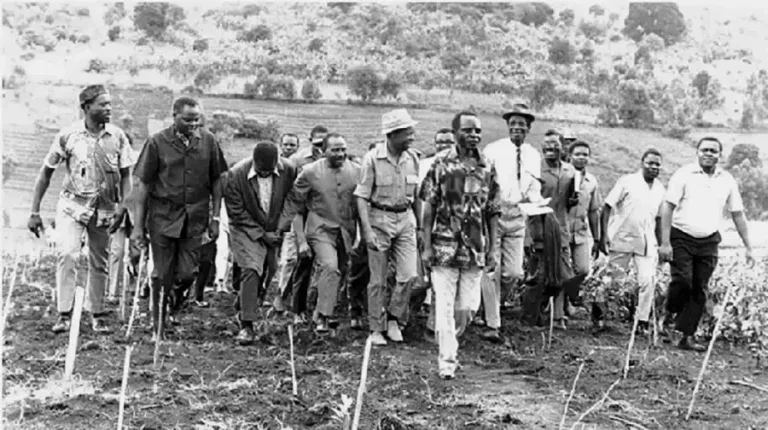
To fully understand the "adult learner" in Tanzania, it is necessary to study the socio- economic conditions which have shaped them. It is not possible to go into all the details here, so we shall limit ourselves to the salient features of the Tanzanian socio-economic system.
Adult education in Tanzania has evolved over time, reflecting the country's socio-political changes and development goals. This brief history highlights some key phases and milestones in the development of adult education in Tanzania.
Pre-Colonial and Colonial Period
In the pre-colonial period, informal education was the norm, with knowledge and skills passed down from one generation to the next. The German colonial regime (1885-1919) introduced formal education, focusing on training bureaucrats for administrative roles. This included training in Swahili and basic administrative skills.
During the British colonial period (1919-1961), the emphasis shifted towards a broader educational agenda. The Phelps-Stokes Commission in the 1920s recommended adapting education to local needs, particularly in agriculture. The British colonial office's 1944 memorandum on Mass Education advocated for adult literacy and community development programmes, emphasizing agricultural productivity and local involvement.
Post-Independence Era
Following independence in 1961, Tanzania's focus on adult education became more pronounced. The early post-independence years (1961-1966) lacked a clear strategy, reflecting the socio-economic uncertainties of the time. However, adult education gained momentum with the introduction of the Arusha Declaration in 1967, which promoted Socialism and Self-Reliance.
The Arusha Declaration called for a revolutionary form of education, with political education seminars organized nationwide. School teachers were mobilized to educate the masses on socialist principles and rural development. The Second Five-Year Development Plan (1969-1974) formalized this role, integrating teachers into adult education programs focusing on agriculture, health, and citizenship.
Key Developments and Campaigns
Several mass education campaigns were launched to promote adult education:
• "To Plan is to Choose" (1960s): Aimed at familiarizing people with the Five-Year Plan (1964-1969).
• "The Choice is Yours" (1970): Prepared people for elections.
• "Time to Rejoice": Fostered national identity and evaluated post-independence development.
• "Money is Health, and Food is Life" (mid-1970s): Raised awareness of health, communicable diseases and preventive measures.
In 1967, the Arusha Declaration established adult education as a major tool for national development. In 1970, the first president of Tanzania, Mwalimu Julius Kambarage Nyerere, declared the year "Adult Education Year" and moved the programme from the Ministry of Rural Development to the Ministry of National Education. The goal of adult education in Tanzania was to improve the skills, knowledge, and abilities of adults so that they could lead more productive lives. The focus shifted towards eradicating illiteracy, particularly in target districts like Dar es Salaam and Kilimanjaro.
Institutional Framework and Achievements
Tracing the history of adult education in Tanzania back to the 1960s, the Institute of Adult Education (IAE) was established as an extramural studies section of Makerere University College. The Tanzanian government also established various institutions and frameworks to support adult education:
• Directorate of Adult Education: Coordinated adult education activities nationwide.
• Adult Education Committees: Formed at regional, district, divisional, and ward levels, involving local political leaders.
These efforts led to significant improvement in literacy rates, with national literacy examinations in 1975, 1977, 1981, and 1983 showing substantial progress. However, field observations indicated the need for continuous improvement and more reliable reporting.
Folk Development Colleges (FDCs)
In the 1970s, Folk Development Colleges (FDCs) were established to address socio-economic challenges, targeting neo-literates and promoting rural development.
Adult education in Tanzania has undergone significant transformation, adapting to the country's changing socio-political landscape. From informal education in the pre-colonial period to structured programs post-independence, Tanzania has made continuous efforts to enhance adult education and address the socio-economic needs of its population. The focus on literacy, rural development, and community involvement continues to shape adult education in Tanzania.