From Struggle to Self-Reliance: How Six ICOLEW Members Launched a Thriving Liquid Soap Business
Uganda
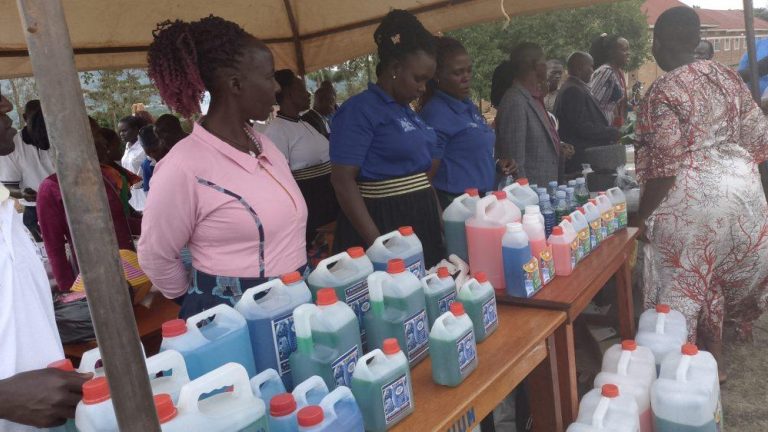
In the heart of Baloole Village, situated in Kyebe sub-county of Kyotera District, a small but determined group of six individuals, that is five women and one man, have become a shining example of what empowered communities can achieve. United under the name TUKOLEREWAMU Community Empowerment Group (CEG), these members were once grappling with low household incomes. Today, they are small-scale entrepreneurs running a profitable liquid soap-making enterprise, thanks to the Integrated Community Learning for Wealth Creation (ICOLEW) program supported by Unbound Kampala.
Their journey began in January 2024, when Unbound extended its ICOLEW program, formerly known as Functional Adult Literacy (FAL) to Baloole village. As part of the KWEWAAYO ICOLEW group, the members participated in a situation analysis session, where they collectively identified low income as a major barrier to improving their lives.
With guidance from ICOLEW facilitators, several business ideas were considered, but liquid soap production stood out. Because it required low startup capital, had a ready market, and the members already had basic training in soap making. Thus, the TUKOLEREWAMU CEG was born.
With initial funding of UGX 70,000 (about US$17) from Unbound, they purchased materials and produced 60 litres of soap. Selling each litre at UGX 2,000, they earned UGX 120,000, almost doubling their investment. Motivated by the success, they invested in branding and packaging to expand their reach. Their big break came when they showcased their product during International Literacy Day, gaining exposure, customers, and community recognition.
To date, the group has accumulated a net profit of UGX 956,000. But their impact doesn’t end there. With a portion of their earnings, they’ve begun offering low-interest loans to group members, enabling them to start individual income-generating projects. This smart move is not only diversifying their incomes but also advancing their collective goal of financial independence.
We now dream bigger. What started with a small grant has become a movement of hope. (Jonesia, a member of the group)
Despite their remarkable progress, TUKOLEREWAMU CEG has had to overcome tough hurdles along the way. One of the biggest challenges has been the lack of sufficient capital to expand. While the group has worked hard and managed to make profits, the earnings are still too small to buy modern equipment or increase production to keep up with the growing demand. This has slowed their growth and made it difficult to compete with bigger producers. Even so, the group has not lost hope. They are now exploring partnerships with microfinance institutions, SACCOs, and local government programs that can offer affordable financing. With such support, TUKOLEREWAMU CEG is confident they will scale up, improve the quality of their products, and create even greater impact in their community.
The story of TUKOLEREWAMU CEG is a testament to what can happen when education, training, and community support converge. It also aligns closely with the objectives of Uganda’s Third National Development Plan (NDPIII), which emphasizes increased household incomes and improved quality of life.
Thanks to the ICOLEW program and the resilient spirit of its participants, poverty is no longer a life sentence for this small group in Kyotera, it’s becoming history.