COLLECTIVE EFFORT AS A CATALYSIST TO GOAL ACCOMPLISMENT AMONG COMMUNITY MEMBERS
Uganda
With “Stable Happy Families” being Unbound Kampala’s Vision, a number of interventions were employed to ensure sponsored families are happy and stable.
As part of the ICOLEW program, members were sponsored by Unbound Kampala who lacked a chance to attend formal education, They are trained to acquire skills used in day to day life. It’s through this initiative that learners form groups (Community Empowerment Group - CEG) with guidance from ICOLEW facilitators where they work together to achieve their goals.
Mr. Sulaiman Ssempijja is a resident of Butiti village –Butiti Parish –Lwanda sub-county, Rakai district in Uganda living with his wife and 5 children. When Unbound mobilized for enrollment of adult learners of the ICOLEW program, he and another 32 members joined and formed Toggwamussuubi ICOLEW CEG.
Mr. Sulaimani was renting a one roomed house which was not adequate and safe to accommodate all members of his family. His wife Fatuma and 5 children sensed a golden opportunity. During the Group meeting, he shared his challenge with group members and it caused concern among the group who later decided to intervene. He had acquired a plot of land and had already constructed a VIP latrine using his sponsorship funds, members of Toggwamussuubi CEG decide to give a hand to ensure Mr. Sulaiman achieved his goal of constructing a three roomed house.
ICOLEW fosters a sense of collective responsibility and encourages active participation in development initiatives. Participants utilize participatory rural appraisal (PRA) methods to determine the most important subjects for group learning. This method allows them to identify barriers that hinder progress and devise strategies to overcome them.
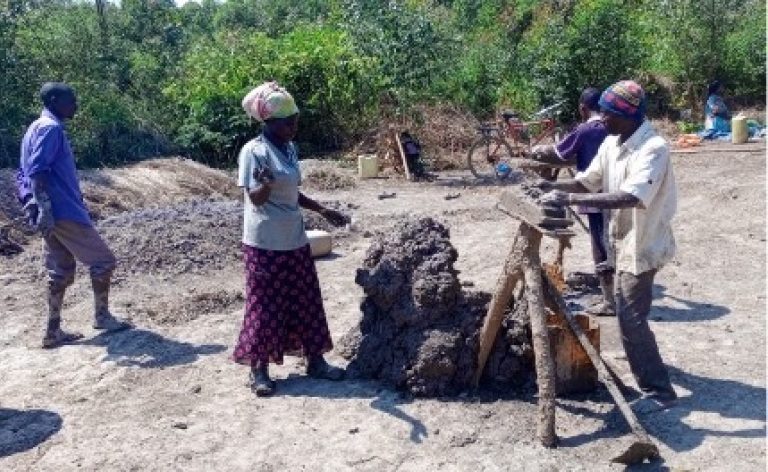
Through the practice of labor pooling, group members work together as a team in each activity that they agree upon. In this case, these included laying bricks, digging the foundation of the house, collecting water, fetching sand in addition to any other kind of labor that was required. They managed to lay 15,200 bricks which were enough to build a three roomed house as per their plan. The group members also helped Sulaimani to acquire a loan from their CEG saving and loaning scheme and he was able to buy other materials like iron sheets, iron bars and timber as well as catering for other labor costs which required a technical person.
Toggwamussuubi ICOLEW CEG had identified food insecurity and low incomes as some of the challenges they face as a community. They agreed to grow more food and apply sustainable agricultural practices to increase productivity. Sulaiman managed to establish a banana garden of around 50 plants and 30 coffee trees on the plot boundary thus ensuring food security for his family members.
The ICOLEW program gives community members the chance to collaborate and forge close bonds, which produces more lasting and successful results. When community members work together, they can combine their financial, material, and human resources to accomplish objectives that would be hard or impossible to accomplish on their own.