ALE Country Profile
Mali
Country Information
Region:
Language:
Population:
Adult Learning and Education (ALE) is managed at the government level by the Ministry of National Education (MEN) through three central structures: the National Directorate of Non-formal Education and National Languages (Dnenf-Ln); the National Centre for Non-formal Education Resources (Cnr-enf), and the Malian Academy of Languages (AMALAN). Other relevant ministries include the Ministry for National Entrepreneurship, Employment and Vocational Training (MENEFP); Ministry of Territorial Administration and Decentralization; Ministry of Agriculture; Ministry for the Advancement of Women, Children, and Families; Ministry of Health and Social Action; Ministry of Crafts and Tourism, and the Ministry of Livestock and Fisheries.
The Ten-Year Programme for the Development of Education and Vocational Training - Second Generation (PRODEC 2), 2019-2028, is the primary reference document guiding education and vocational training. Adult Education and Training is also informed by the National Policy on Non-Formal Education (2009) – currently under review, as well as the Language Policy (2014) and the National Vocational Training Policy (2009).
To promote ALE, the government implements various programmes, the main one being the literacy programme based on acquiring Eight Life Skills: (1) Education; (2) Health, nutrition and hygiene; (3) Environment; (4) Gender and protection of women and children; (5) Culture of peace, human rights, and citizenship; (6) Leadership; (7) Socio-economic integration and (8) STIs and HIV/AIDS. Additional programmes include the Expanded Vaccination Programme (PEV), the AIDS control Programme (PNLS), the Training and Support Programme for Rural Youth Entrepreneurship (FIER) Phase 2, and the Support Fund for Vocational Training and Apprenticeship (FAFPA).
Read some of the Mali governments recent policies here and here.
The national response to the demand for literacy and education targets those aged 9-15, as well as adults up to the age of 50. In 2023-24 the following structures were provided:
- 719 Functional Literacy Centres (CAF): Non-formal education and training centres belonging to communities. They are open to adults, both men and women aged 16 and older, young illiterates, and early school dropouts. A total of 12,187 learners were trained, of which 8,484 were women.
- 426 Education for Development Centres (CED): Non-formal community education and training centres. These centres are open to out-of-school youth, aged 9 to15. A total of 6,333 learners were trained, including 2,649 women.
- 4 Women’s Learning Centres (CAFé): Non-formal community education and training centres that cater to out-of-school women and girls, aged 16 to 45. 527 learners were trained during the current phase.
- 1 Integration Education Centre (CEI): Non-formal community-based education for out-of-school girls and boys aged 9 to15, as well as men and women aged 16 and older. The training cycle at the CEI lasts from 2 to 4 years, alternating theoretical training with practical work.
In addition to these structures, the government and local authorities manage more than 20 vocational training centres (CFP) for training adults, one of the best-known being the Missabougou Vocational Training Centre (CFPM) in the capital Bamako.
Several centres, including many established by civil society partners, also participate in implementing the National Policy on Adult Education and Training, including the Agri-Food Centre of Siby (CAAS). CAAS is a Vocational Training Centre specialising in Agri-Food Transformation, and focuses on the training and capacity building of rural women's groups and out-of-school girls, aged 18 to 21.
Training manuals, such as reading, writing and arithmetic booklets for levels 1 and 2 (level 2 incorporates the Eight Life Skills), are also available in 13 indigenous languages and disseminated at all decentralised levels of national education (e.g. Teaching Academies (AEs), Pedagogical Animation Centres (CAPs) and adult learning institutes). Specialised glossaries in natural sciences, mathematics and physics-chemistry are available in both French and national languages, along with a training guide for newly-literate people in French, all of which are widely distributed.

Civil society actors are also very active in ALE. Pamoja-West Africa (comprising 14 member countries, including Mali, with 24 member NGOs and associations), coordinates the non-formal education component of the Quality Education Support Programme in West Africa (PRAQUE-AO). The Civil Society Coalition for Non-formal Education (COSENF) consists of 3 networks (Pamoja, Yeelen Bulon and the Education for All network - composed of 21 members) and 6 other NGOs. It is active in advocacy, networking, and training national and local stakeholders. COSENF also leads the non-formal education project of the Organization for Support to Rural Populations (AAPPOR-Mali).
UN organisations, such as UNICEF and UNESCO, as well as international NGOs and bilateral donors like the Swiss Cooperation, Luxembourg Cooperation (LuxDev), Canadian Cooperation, the Stromme Foundation, the Karanta Foundation, Caritas-Mali, the Salvation Army, and the International Linguistic Society also contribute greatly to the implementation of the National Policy on Adult Education and Training.
The private sector is also active. Mining companies (Barrick, Gold, B2GOLD, Resolute Mining, etc.) and parastatal entities (the Malian Company for Textile Development - CMDT, the office of the Upper Niger Valley—OHVN, and agricultural and craft chamber assemblies) invest in literacy and training for rural populations (farmers, herders, fishermen, women's production groups, etc.) in their respective intervention areas through decentralised communities and direct operations.
DVV International has been a key partner working with the government and civil society since 2008. Its work focuses on various areas, including supporting the Ministry of National Education in producing non-formal education (ANFE) status reports through surveys and workshops that bring together all stakeholders; revising and implementing the National Policy for Non-Formal Education (AENF); establishing and operationalising AENF within the École Normale Supérieure (ENSUP), and assisting civil society organisations in networking and advocacy. DVV International is also involved in assisting community organisations setting up and supporting Community Learning Centres (CLCs).
To learn more about the partners and activities of DVV International in Mali, please click here.
Despite all the abovementioned policies, mechanisms and coordination systems, less than 3% of the education budget is allocated to the non-formal education subsector, and the adult literacy rate stands at 30.76% (Dnenf-Ln). Women are the least literate group (22.08%), while the literacy rate for men is higher at 40.43%, indicating a significant gender gap. The challenges are even greater in rural areas.
In terms of future perspectives, the Government of Mali has made non-formal education (AENF) a national priority. It is seen as crucial for the promotion of development and strengthening social cohesion. It can contribute to peace by integrating national languages into the education system. The report from the General States of Education (REGE) - August 2023 to February 2024 - made the following recommendations:
- Develop the subsector of literacy and non-formal education so that Malians can participate in the country's growth;
- Finance the non-formal education subsector on par with formal education, and
- Focus the learning programmes of literacy and non-formal education centres on the economic needs of adults (both men and women).
Learn more about ALE best practices in Mali.
For any corrections or additional information, please contact: info@mojaafrica.net
Latest from MOJA
-

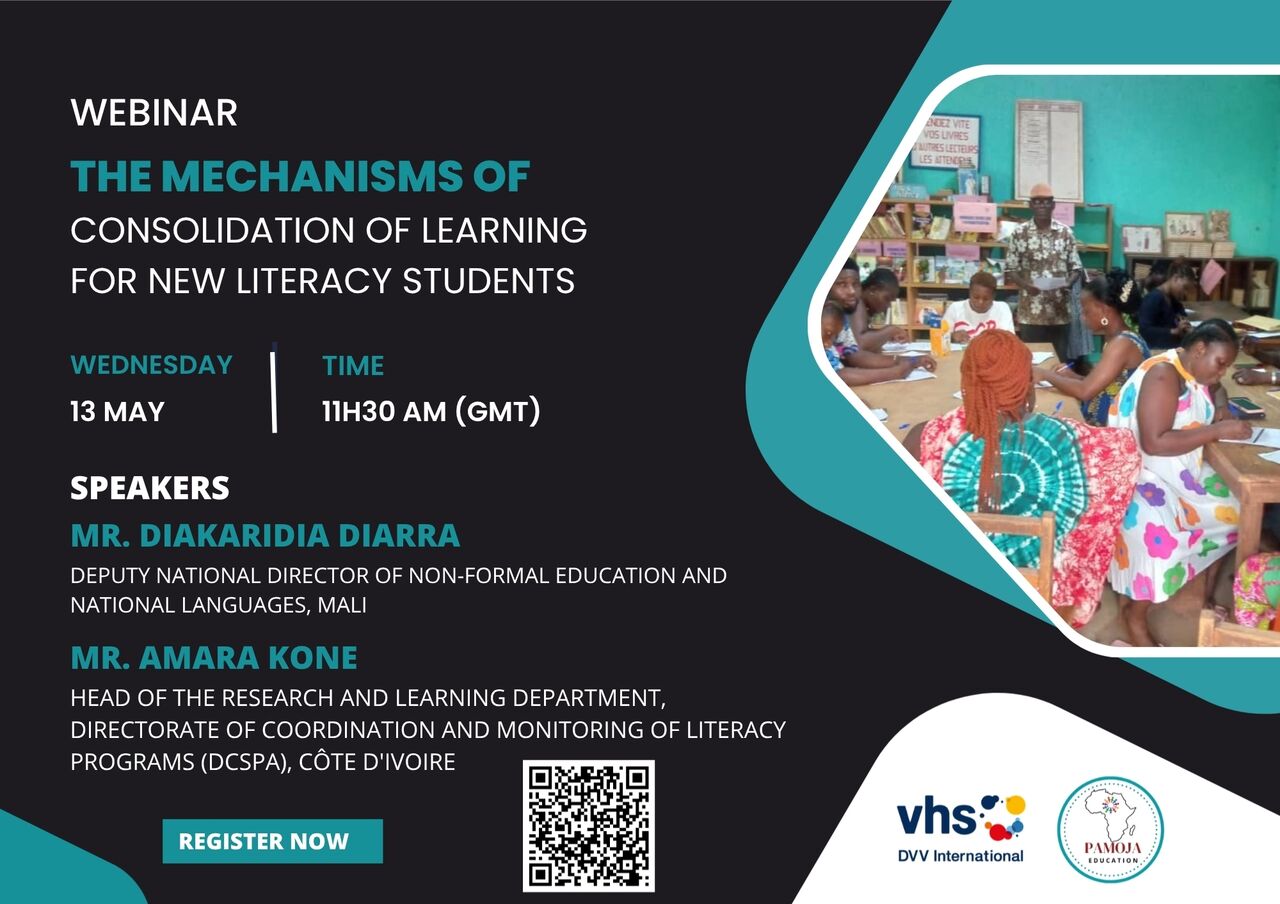
The Mechanisms of Consolidation of Learning for New Literacy Students
Available languages:
EN -
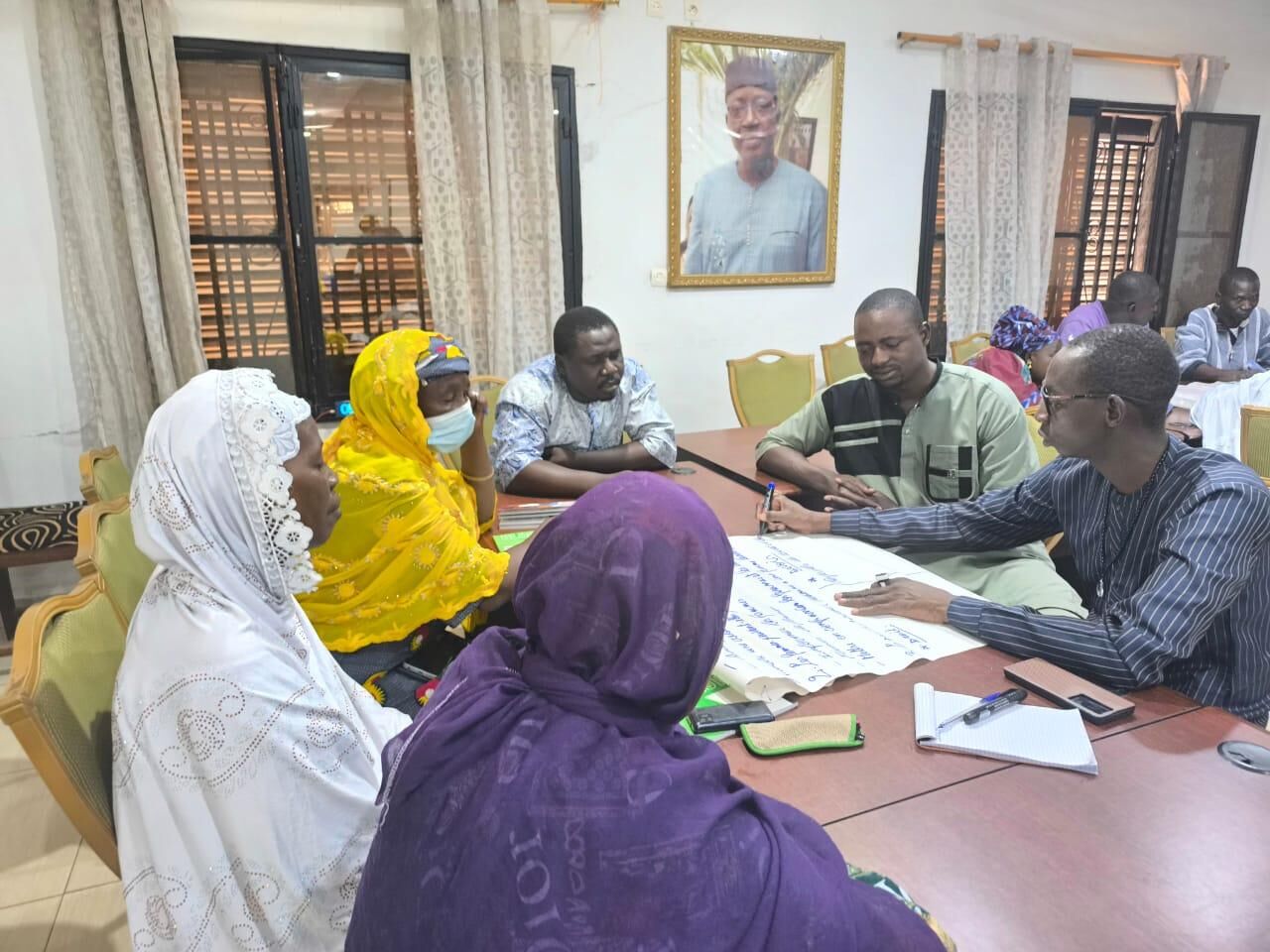
Education des adultes et leadership féminin au Mali, une initiative du Ministère fédéral des Affaires étrangères de l’Allemagne ( Auswartiges Amt) et DVV International.
Available languages:
FR -
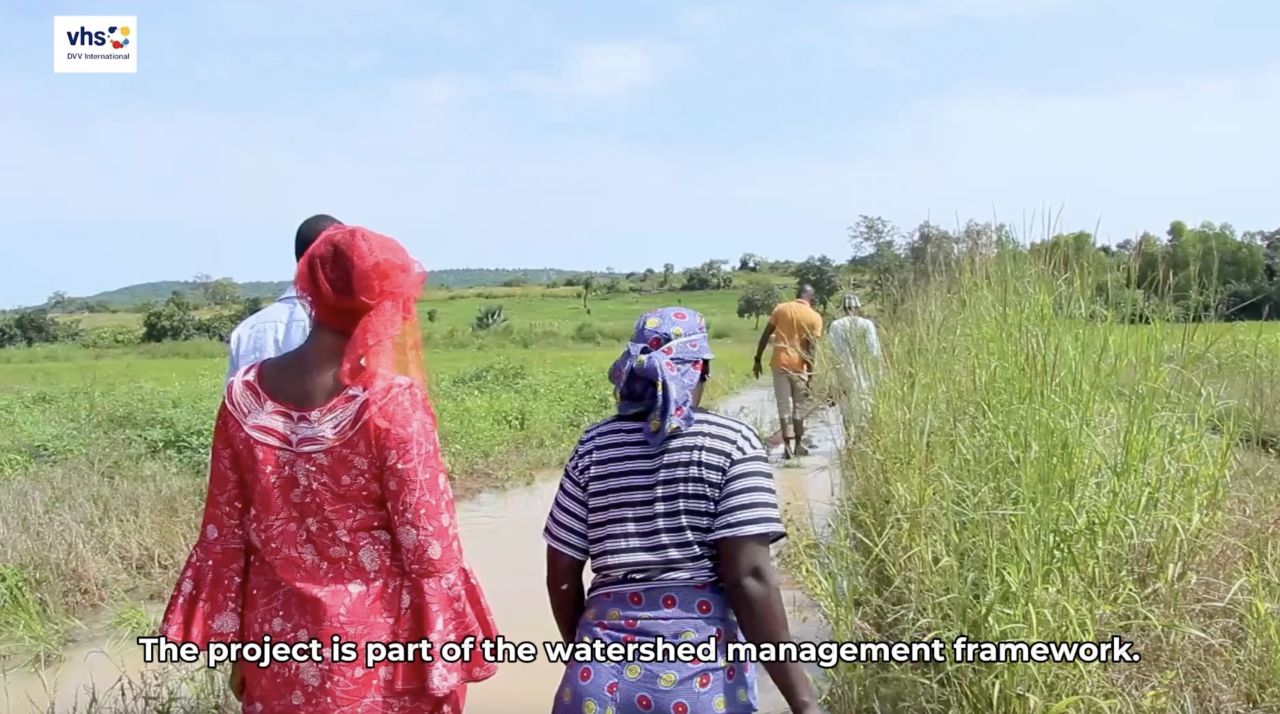
Income-generating environmental services in watersheds for the promotion of small-scale irrigation systems in three municipalities in the Koulikoro and Dioila regions
Available languages:
FR EN