Publication: 30 Years of Journey in Advancing Adult and Non-Formal Education in Ethiopia - Ethiopia
Posted on:
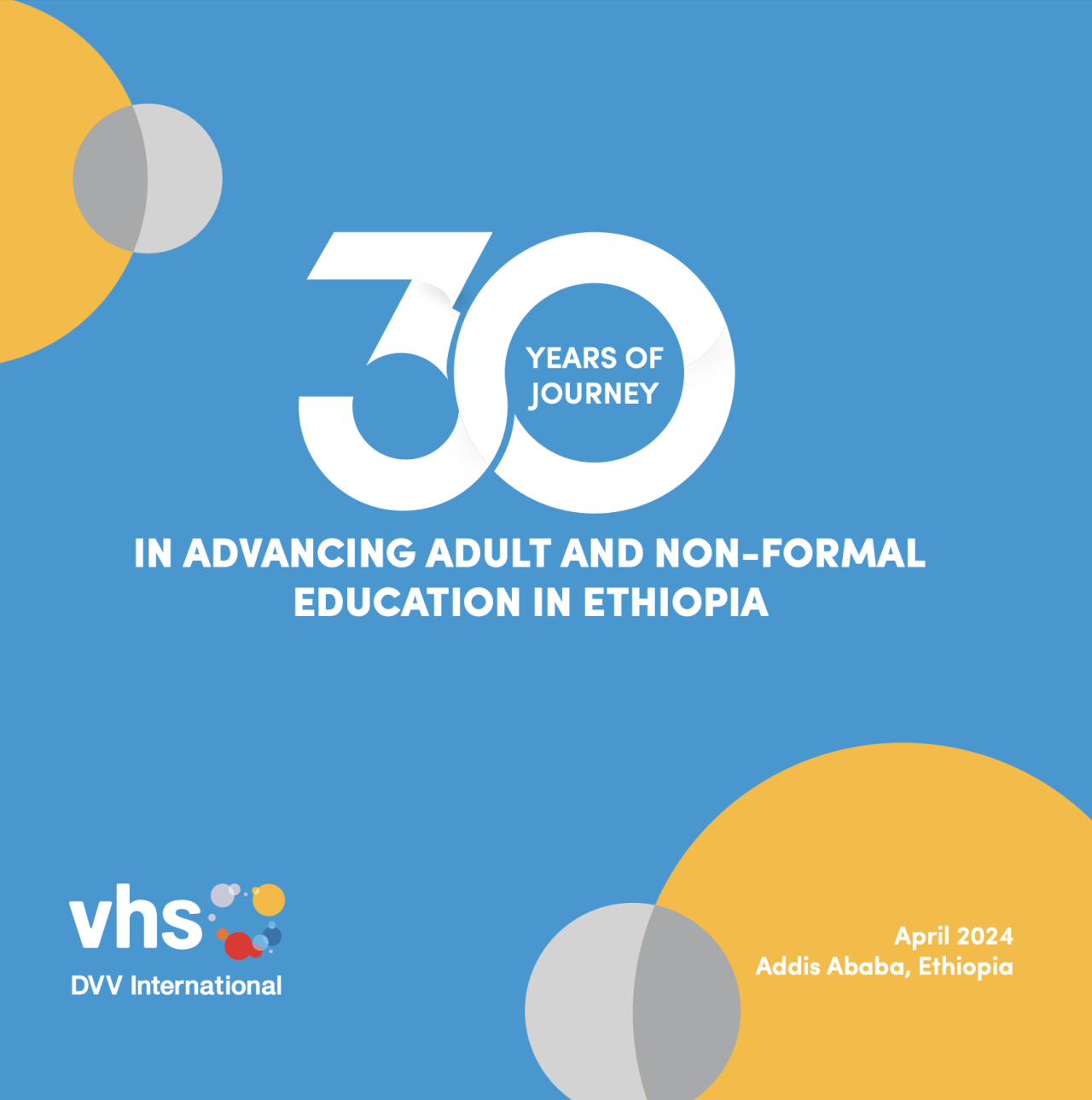
The publication "30 Years of Journey in Advancing Adult and Non-Formal Education in Ethiopia," was launched recently during the 30 Years Journey Conference of DVV International in Ethiopia.


Advancing Adult and Non-formal Education in Ethiopia for the past 30 years - Ethiopia
Posted on:
This video provides a comprehensive overview of DVV International's 30-year journey in Ethiopia. It showcases how the organisation established and supported the structural development of the adult education sector in the country.

Guidebook sustainabALE
Posted on:
What is the Guidebook sustainabALE?
The SustainabALE Guidebook and supplementary working materials support Adult Learning and Education (ALE) organisations in the implementation of a holistic sustainable organisational development process in line with the Whole Institution Approach (WIA).
The models, tools and good practice examples presented here were developed as part of the “International ESD Alliances” project funded by the Federal Ministry of Education and Research (BMBF).
The products are based on the experiences of ALE organisations from seven countries. The materials contribute to anchoring Education for Sustainable Development (ESD) as a cross-cutting topic in an educational organisation. This enables the organisations to make a contribution to a socio-ecological transformation which goes beyond the implementation of ESD into the educational programme and promotes a holistic approach of sustainability criteria.


Adult Education and Social Justice: International Perspectives - Italy
Posted on:
Lalage Bown, a prominent figure in adult education, dedicated her life to promoting social justice through education, particularly in post-colonial regions. This book explores the contemporary relevance of her work and aims to honor her legacy by analyzing its impact on policy, practice, advocacy, and research in adult education.