Interview: MOJA Advisory Committee member Professor Rebecca Lekoko
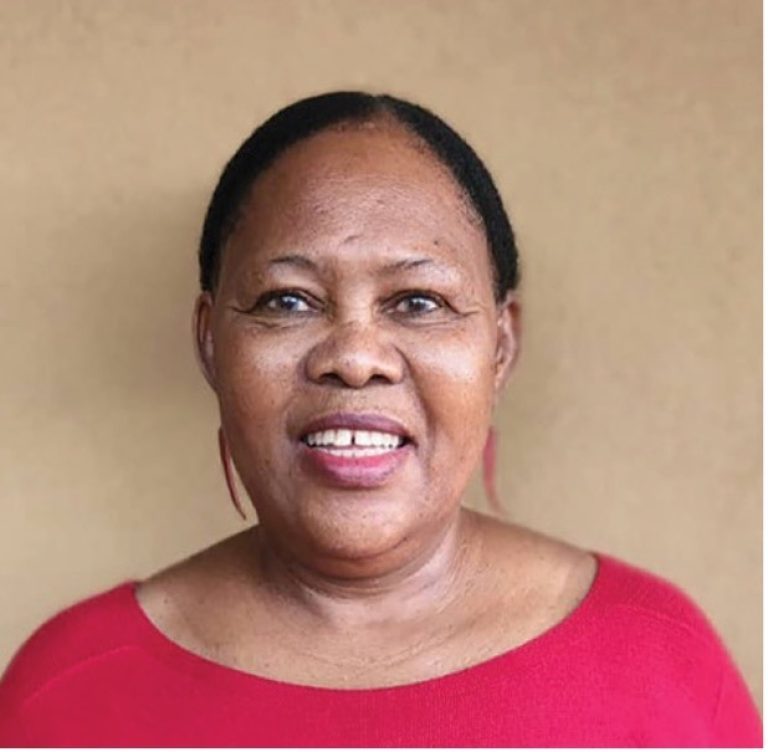
We talked to MOJA Advisory Committee member, Professor Rebecca Lekoko (Botswana) and caught up on what’s happening in ALE in her country and the region. We asked her some questions to help increase our understanding of the sector.
- You took part in DVV International’s first African ALE Conference. What were the key insights you gained from the conference?
Talking of the key insights gained from the conference:
First and foremost, the lesson for me, was the need for a unitive approach. Let me explain it, like this; a conference with the intent to bring Africans together has one key message, that is:
Africans need to be united in identifying African challenges and working out strategies to address these.
That’s what I mean by a Unitive Approach.
The theme of the conference was Adult Education for a Just Transition: ALE as a key to community development. The key words, a Just Transition, signifies a move away from something, usually not desirable, to something better. As adult educators, we should be imaging a multiplicity of alternative better worlds to the worlds of inequalities, worlds of exploitation, worlds in which building solidarity or peace is shunned, worlds in which Africans ignore or shun their roots of indigenous ways of knowing, of collective cooperatives, etc. You see, we all talk of poverty and gender inequality, violence or imbalance in education, but it is still impossible for us Africans to leave these unfair worlds and transit to better worlds where the gaps are closed or lessened. If we look at the example of Botswana, we talk smartly about solutions, and we are very good in putting what can be done on paper, but when it comes to implementation, our actions don’t match our words. The potentials of adult education are buried by our very own actions. We need, as Africans, to help each other to come up with “strategies that aim to build thriving economies … and ecologically sustainable livelihoods” (ALE Conference Introduction). But how are we going to do this? This is a tough question that we Africans, collectively must address. Hence my focus on a Unitive Approach.
One other key insight from the conference is the need to share experiences and learn from each other during this envisioned transition. Efforts were made at the conference to illustrate how we may share our experiences and to make sense of the variety of strategies used by different countries to address challenges. For example, in the panel discussion on climate change, the interactive process that we engaged in brought forth some major themes of transformation, change and sustainability which bond us together as Africans, regardless of where we come from.
The key message of the conference for me was that as Africans, we need each other more for this transition; we need to learn with and from each other as we devise strategies to ensure that ALE becomes truly key to addressing the needs and challenges of developing our communities.
- What do you think are the most important areas that ALE should focus on in the coming years?
Climate justice education –this area was addressed at the first African ALE conference; also, it was a headline in PIMA BULLETIN NO 49 Special Issue of November 2023 - Climate Justice Education. We should not get tired of talking about it and looking for effective strategies to address this; climate change is devastating. Does everyone know and understand the root causes of this and are we able to properly analyse the issue? I don’t think so. I still believe we need to tell our real stories of how this is affecting us in order to understand this monstrous challenge. As I said earlier, a unitive approach/coordinated actions are needed by ALE providers, funders and interest groups to map out how we can relevantly and reliably engage to protect, for example, the vulnerable from climate extremes; how to mobilize climate-responsive funding (climate finance), and how to build the resilience of different groups, such as farmers.
If we prioritize literacy, we could revisit the 2023 Literacy Day theme, which said: Promoting literacy for a world in transition: Building the foundation for sustainable and peaceful societies. Indeed, we do not have peace and sustainability these days. The question is
How do we as adult educators address these contemporary realities of our everyday life? Can literacy programs assist?
We need to prepare the most affected, the vulnerable in our respective countries, to understand and survive in their contemporary living environments. Out of school education, specifically literacy classes, can add value by giving participants a language of living and expressing contemporary life environments through teaching them reading, writing and numeracy. They need a language with which to participate actively in what is happening in their communities.
Let’s re-look at non-formal pedagogies and the andragogies that we use and ask the question:
Are they really preparing participants to adapt to the current realities of their lives
- Active Ageing – Age with Rights
When I talk of active ageing, I am thinking of older adults (60 years and over) in our communities. Have these people stopped learning? No. Do our ALE agendas target or prioritise them? Not that I am aware of. I wish to see a clear renewed ALE vision or strategy of how we address the lifelong learning needs of this group. In Botswana, they are listed as vulnerable and they should not be left behind as we think of transition strategies for empowering the world’s most vulnerable populations – to improve their livelihoods through ALE. ALE needs to be well-positioned to address the right to learn at any age. In 2017, together with my colleague, Professor Nthomang, we contributed a chapter in ‘The Palgrave International Handbook of Adult and Lifelong Education and Learning’, with the title ‘Lifelong learning for Africa’s older adults: The role of open education.’’ This was an effort on our part to ring a bell and raise people’s attention, especially ALE providers, to realise our responsibility to include this group.
- What changes to how ALE is implemented would you like to see governments introducing??
There is a lot of training and education happening in Botswana that could be classified as ALE. However, some providers do not consider what they do to be ALE. Others don’t want to be associated with ALE because it is often viewed as inferior to other sectors. A paper, ‘Making meaning of stigmatization of University-based adult education in Botswana’ which I co-wrote with Professor Modise in 2017 and was published in a book called ‘Mapping the field of adult and continuing education: An international Compendium, Vol 3: Leadership and Administration, addressed some of the main challenges that providers like governments and higher education institutions must address. In short, the paper addresses the marginalization of adult education, which is being perpetuated by conflicting leadership, fragmented visions, and weak legislation. A shared vision is key for addressing these challenges. It talks about the need for governments to redefine the role of adult education in national development.
A unitive approach is needed; one that includes all stakeholders, especially people from within communities, in the decisions that shape ALE.